
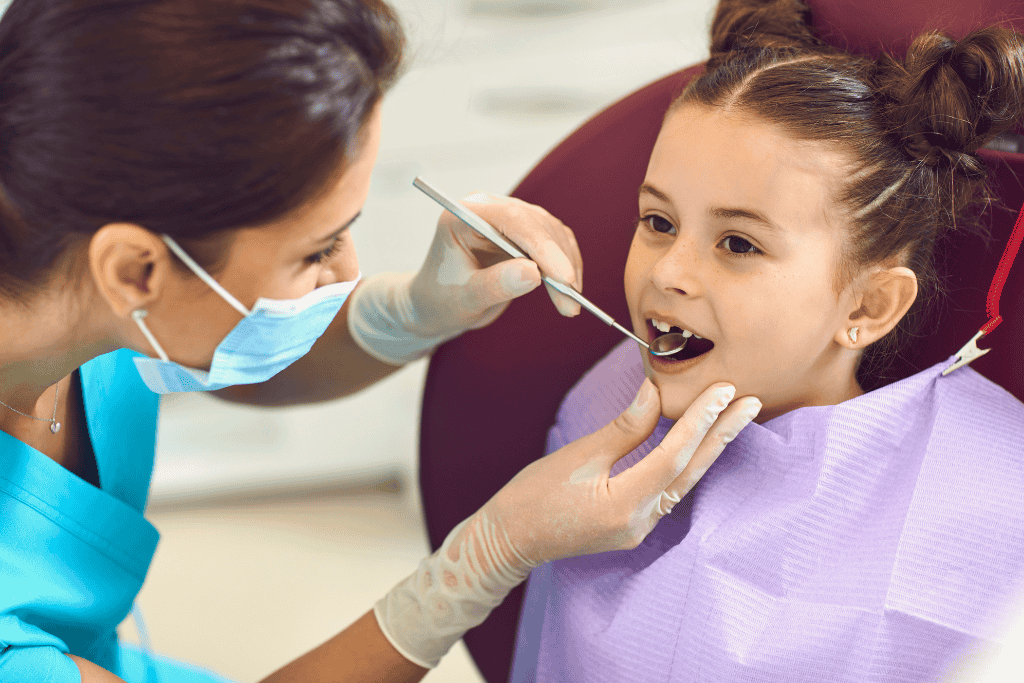
As a parent, you want to get everything right for your child, and oral health is no exception. One of the most common questions we hear at Bealeton Family Dentistry is: “When should my child first see a dentist?” It seems like a simple question, but the answer has a real impact on your child’s long-term dental health, confidence, and even their attitude toward dental care as they grow up.
The good news is that you do not need to wait until your child has a full set of teeth, or even until they start school. In fact, the earlier you start, the better. In this guide, we break down exactly when your child’s first dental visit should happen, what to expect when you come in, and why starting early sets the foundation for a lifetime of healthy smiles.
The Official Recommendation: First Tooth or First Birthday
Both the American Academy of Pediatric Dentistry (AAPD) and the American Academy of Pediatrics (AAP) share the same guidance: a child should see a dentist by their first birthday, or within six months of the first tooth appearing, whichever comes first.
For most children, the first baby tooth (usually a lower front incisor) arrives somewhere between four and seven months of age. This means many children are ready for their first dental visit before they even take their first steps.
Why So Early?
Early dental visits are not about drilling or filling. They are about prevention, parent education, and establishing a relationship between your child and their dental team before any problem arises.
Even a single baby tooth can develop decay. Early childhood caries (often called baby bottle tooth decay) is one of the most common chronic conditions in children under five, and it progresses faster in primary teeth than in adult teeth. Catching it early, or better yet, preventing it entirely, makes a significant difference to your child’s comfort, development, and dental costs down the line.
Why Baby Teeth Matter More Than You Think
A common misconception among parents is that baby teeth are temporary, so problems with them are not serious. In reality, primary teeth serve critical functions that directly affect your child’s development.
1. Speech Development
Baby teeth play a foundational role in how children learn to form sounds and words. Missing or damaged front teeth, in particular, can interfere with the pronunciation of letters like ‘s’, ‘th’, and ‘f’. Early dental care helps preserve these teeth and supports natural speech development.
2. Proper Nutrition and Chewing
Children need healthy teeth to chew food effectively. Tooth decay or early tooth loss can cause discomfort that makes eating painful, which in turn can affect nutrition and healthy growth.
3. Space Preservation for Permanent Teeth
Baby teeth act as space holders for the adult teeth developing beneath the gum line. If a primary tooth is lost too early due to decay or injury, neighbouring teeth can drift into the space, potentially crowding the permanent teeth and creating alignment issues that may require orthodontic treatment later.
4. Confidence and Social Development
Children notice their smiles, and so do their peers. Healthy, well-maintained teeth contribute positively to a child’s self-esteem and social confidence as they grow.
What Happens at Your Child’s First Dental Visit?
We understand that first appointments can feel a little daunting, both for parents and for little ones. At Bealeton Family Dentistry, we approach every child’s visit with patience, warmth, and a focus on making the experience as positive as possible.
Here is what you can typically expect during a first visit for a young child:
| What We Do | Why It Matters |
|---|---|
| Gentle oral examination | Check teeth, gums, jaw, and bite for early signs of issues |
| Digital X-rays (if appropriate) | Identify decay or development concerns not visible to the eye |
| Teeth cleaning | Remove plaque and tartar buildup in a gentle, child-friendly way |
| Fluoride treatment (if recommended) | Strengthen tooth enamel and reduce risk of early cavities |
| Parent education and guidance | Discuss brushing techniques, diet, thumb sucking, and more |
| Personalised treatment plan | Establish a schedule and preventive strategy for your child's needs |
The entire visit is designed to feel more like an exploration than a procedure. We encourage parents to stay with their child throughout the appointment, and our team takes the time to answer any questions you may have.
How to Prepare Your Child for Their First Appointment
Preparation makes a big difference. Even very young children respond to calm, positive framing. Here are some practical steps you can take in the days leading up to the visit.
- Talk about the dentist in a positive, matter-of-fact way. Avoid using words like “pain”, “needle”, or “hurt” in your explanations.
- Read children’s books about dental visits. Titles like ‘The Berenstain Bears Visit the Dentist’ or ‘Mortimer’s First Garden’ can help normalise the experience.
- Play pretend dentist at home. Let your child open wide while you count their teeth with a toothbrush, so the idea of someone looking in their mouth feels familiar.
- Schedule the appointment at a time when your child is well-rested and not hungry, typically mid-morning works well.
- Avoid transferring your own dental anxiety. Children are perceptive and pick up on nervous energy. Our team at Bealeton Family Dentistry is experienced in creating calm, reassuring environments.
- Bring a comfort item if needed, such as a favourite toy or blanket, to help your child feel secure.
Establishing Good Oral Hygiene from the Start
The habits your child develops now will influence their dental health for decades. We always recommend beginning oral hygiene before the first tooth even appears.
Before Teeth Appear (0 to 6 Months)
Wipe your baby’s gums with a clean, damp cloth or a soft silicone finger brush after each feeding. This removes milk residue and gets your baby used to oral cleaning.
First Tooth to Age 3
Once the first tooth comes in, begin brushing twice daily with a soft-bristled infant toothbrush. Use a rice-grain-sized amount of fluoride toothpaste. Always brush before bed to clear away the day’s sugar and bacteria.
Ages 3 to 6
Increase toothpaste to a pea-sized amount. Begin introducing flossing once two teeth are touching. Continue supervising brushing, as most children do not have the manual dexterity to brush effectively on their own until around age seven or eight.
A Quick Note on Diet
Frequent snacking on sugary or starchy foods, including fruit juices and dried fruit, is one of the leading causes of early childhood cavities. The sugar itself matters less than the frequency of exposure. Limiting juice to mealtimes and encouraging water between meals makes a significant difference.
How Often Should Children Visit the Dentist?
After the first visit, we generally recommend dental check-ups every six months for children, in line with standard preventive care guidelines. However, this can vary depending on your child’s individual risk factors.
Children with a higher risk of cavities, such as those who consume more sugar, have enamel defects, or have had prior decay, may benefit from more frequent visits. Our team will assess your child at each appointment and recommend a visit schedule tailored to their needs.
Regular six-monthly visits allow us to:
- Monitor the development of permanent teeth
- Detect and treat decay early before it requires more invasive treatment
- Apply preventive treatments such as fluoride varnish and dental sealants
- Track jaw and bite development
- Reinforce oral hygiene education as your child grows
What Are Dental Sealants and Does My Child Need Them?
Dental sealants are thin, protective coatings applied to the chewing surfaces of the back teeth (molars), where cavities most commonly develop in children. The sealant fills in the deep grooves and pits of the tooth surface, creating a smooth barrier that is much easier to keep clean.
Sealants are quick to apply, completely painless, and have been shown to reduce the risk of cavities in treated teeth by up to 80 percent. We typically recommend sealants once the first permanent molars come in, usually around age six, and again when the second permanent molars appear around age twelve.
At Bealeton Family Dentistry, sealant application is a straightforward preventive procedure that can save your child from discomfort and future restorative treatment. Our dentists will assess whether sealants are appropriate at your child’s next check-up.
Common Concerns Parents Ask Us About
My child is scared of the dentist. What should I do?
Dental anxiety in children is very common, and our team is experienced in making nervous patients feel at ease. We take a tell-show-do approach: we explain what we are going to do, demonstrate on a model or the child’s own hand, and then gently proceed. We never rush or force a procedure if a child is distressed. Building trust is always the first priority.
My child is three and has never seen a dentist. Is it too late?
It is never too late to start. While we encourage early visits from the first tooth, bringing your three-year-old in today is absolutely the right move. We will conduct a thorough examination, address any concerns, and establish a healthy routine going forward. The important thing is that you are starting now.
Do baby teeth really need fillings?
Yes, in many cases they do. If decay is left untreated, it can spread to surrounding teeth, cause significant pain, lead to premature tooth loss, and even affect the developing permanent teeth beneath. Treating decay early is far less invasive and more comfortable than waiting until it becomes severe.
Are X-rays safe for my child?
Dental X-rays use very low levels of radiation, and modern digital X-rays reduce exposure even further compared to traditional film. At Bealeton Family Dentistry, we only recommend X-rays when clinically necessary, and we always use protective shields. The diagnostic benefits of dental X-rays, such as detecting hidden decay or monitoring tooth development, far outweigh the minimal risk.
Why Families in Bealeton, VA Choose Us
At Bealeton Family Dentistry, we are more than a dental practice. We are a family-focused team that genuinely cares about every patient who walks through our doors. Our dentists, Dr. Malik Usman and Dr. Abdul Majeed DDS, are known for their gentle approach, thorough explanations, and commitment to making every patient, especially children, feel comfortable and respected.
We proudly treat patients of all ages, and we understand that a positive first dental experience shapes how your child feels about dental care for the rest of their life. Our Bealeton, VA office is welcoming, modern, and designed to feel as comfortable as possible for little ones and parents alike.
Visit us: 11077 Marsh Road Ste A, Bealeton, VA 22712
Frequently Asked Questions
The American Academy of Pediatric Dentistry recommends that a child's first dental visit should take place by their first birthday, or within six months of the first tooth coming through. Early visits allow us to catch problems before they develop and help your child build a positive relationship with dental care from the very start.
At a first visit for a young child or baby, we conduct a gentle oral examination to check the teeth, gums, and jaw development. We may also do a light cleaning, apply fluoride if appropriate, and spend time talking with parents about home care, diet, and what to expect as more teeth come in. There are no drills and no pressure.
Talk about the appointment in simple, positive terms. Read books about dental visits, play pretend dentist at home, and avoid using any words that imply pain or fear. Schedule the visit when your child is well-rested. Our team at Bealeton Family Dentistry is experienced with young children and will take everything at your child's pace.
Yes, it is completely normal. Many young children feel anxious about unfamiliar environments. Our team uses a gentle, step-by-step approach and never rushes. We explain everything clearly, use child-friendly language, and allow your child to set the pace. Most children leave feeling proud of themselves.
Most children benefit from a dental check-up every six months. Some children with a higher risk of cavities may need more frequent visits. Our team will assess your child's individual needs at each appointment and recommend a schedule that works best for them.


